;)
;)


Sep 18, 2025
A comprehensive comparison of modern irrigation methods
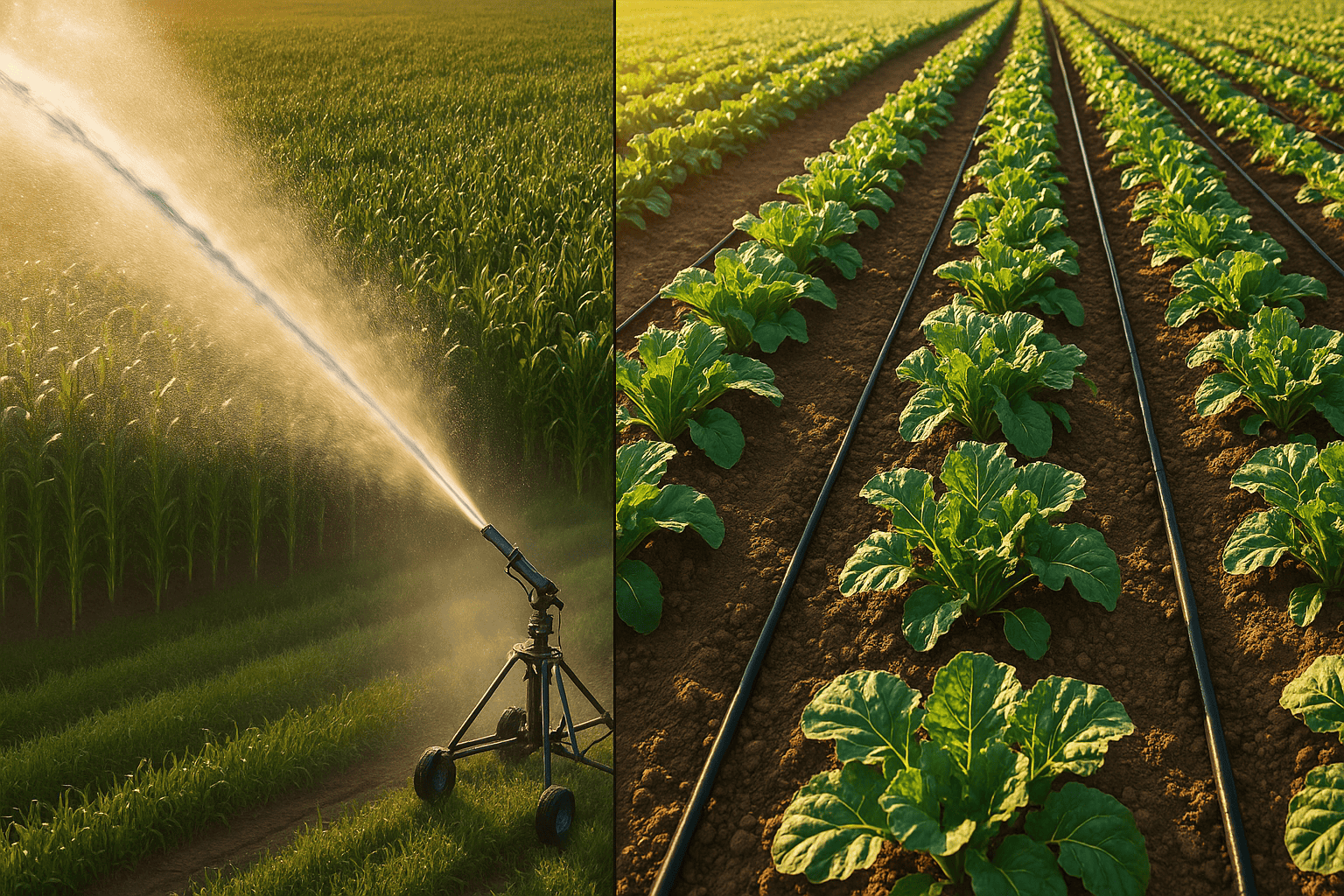
When it comes to modern farming, choosing between Rain Gun Irrigation vs. Drip Irrigation is one of the most important decisions a grower can make. Both systems help farmers save water compared to traditional flood irrigation, but their performance varies depending on crops, field size, and budget.
This guide compares the two methods across seven key factors so you can decide which works best for your farm.
Rain gun systems mimic rainfall by spraying water over a wide field area. This is useful for covering large plots quickly, especially for crops like maize and sugarcane. However, one drawback is that a significant portion of water may evaporate or drift away due to wind. In hot or dry climates, these losses can be even higher, meaning farmers often need to pump extra water to achieve the desired soil moisture.
Drip systems, on the other hand, deliver water directly to the root zone through pipes and emitters. This method reduces evaporation, prevents surface runoff, and ensures that every drop counts. Studies show that drip can save 40–60% more water than sprinklers or rain guns, making it a reliable option in regions facing water scarcity.
👉 Winner: Drip irrigation for its superior water efficiency.
Rain gun irrigation is highly effective for field crops that thrive on broad, uniform wetting. Crops such as paddy, fodder, maize, and sugarcane respond well to overhead spraying. The rain like effect not only irrigates but also helps with dust suppression and cooling crops during hot weather.
Drip irrigation, by contrast, is designed for crops where precision matters. Vegetables like tomatoes, brinjal, and chili, as well as fruit orchards like mango, papaya, and banana, benefit from controlled moisture at the root zone. Flowers and greenhouse plants also thrive under drip because it prevents excess leaf wetting, which can reduce disease risks.
👉 Winner: Rain gun for field crops, drip for high-value crops.
A rain gun system is typically cheaper to set up. Farmers need only a few components: a high-pressure pump, pipes, and the rain gun nozzle. Since the gun can be moved between different plots, it reduces equipment costs for small and medium farmers. However, running costs may rise over time due to higher water and energy requirements.
A drip irrigation system comes with a higher upfront investment. Farmers must install a network of pipes, filters, emitters, and pressure regulators. While initial costs may be a challenge, the system pays for itself through reduced water use, fertilizer savings, and higher yields. For long term planning, drip often proves to be the more cost effective choice.
👉 Winner: Rain guns win in short term affordability, drip in long-term savings.
Rain guns are relatively simple to maintain. Farmers mainly need to keep an eye on nozzle blockages and wear caused by high water pressure. If maintained well, the equipment can last several years. However, they are exposed to environmental wear and tear since they operate in open fields.
Drip systems require more consistent care. Filters and emitters must be cleaned regularly to prevent clogging from silt, algae, or mineral deposits. While this maintenance may seem demanding, a properly managed drip system can last 8–10 years, making it a long-term asset for the farm.
👉 Winner: Both require attention, but drip systems tend to outlast rain guns.
With rain gun irrigation, fertilizer application is less precise. Nutrients mixed with water are spread across the field surface. While this may be acceptable for broadacre crops, it can lead to uneven nutrient absorption, higher costs, and nutrient leaching.
Drip irrigation is highly efficient for fertigation. By mixing fertilizers with irrigation water, nutrients are delivered exactly where plants can absorb them at the roots. This increases fertilizer use efficiency, reduces waste, and lowers the risk of groundwater contamination. Farmers often see improved crop quality because plants receive a balanced supply of water and nutrients.
👉 Winner: Drip irrigation for precise nutrient management.
Rain guns operate at high pressure. This means pumps need more horsepower, which translates into higher fuel or electricity bills. For farmers using diesel pumps, this can significantly add to irrigation costs over a season.
Drip systems, in contrast, work at low pressure and require less pumping power. This makes them ideal for solar powered systems or farms where energy efficiency is critical. Over time, the lower energy requirement not only reduces expenses but also contributes to more sustainable farming practices.
👉 Winner: Drip irrigation for low energy consumption.
Rain gun irrigation can increase yields for certain field crops by ensuring timely irrigation. However, because it wets the entire crop surface, it may also encourage fungal diseases if overused. Its productivity gains are usually moderate.
Drip irrigation is proven to significantly enhance yields, especially for vegetables and fruits. By maintaining consistent soil moisture and supporting fertigation, farmers can see yield improvements of 30–40%. Moreover, produce quality such as fruit size, color, and taste often improves under drip, allowing farmers to fetch better market prices.

👉 Winner: Drip irrigation for higher yield and better crop quality.
| Factor | Rain Gun System | Drip System |
|---|---|---|
| Water Efficiency | Moderate | High |
| Crop Suitability | Field crops | Fruits & Veg |
| Cost | Low initial | Higher initial |
| Maintenance | Medium | Medium–High |
| Fertilizer Use | Uneven | Precise |
| Energy Use | High | Low |
| Yield Improvement | Moderate | High |
The debate between Rain Gun Irrigation vs. Drip Irrigation doesn’t have a single answer. Each method has strengths depending on farm size, crop selection, and budget.
What’s certain is that both of these modern irrigation methods are far more efficient than flood irrigation. By upgrading, you save water, reduce costs, and build a more sustainable farm.
👉 At Deep Tec, we help farmers select the most suitable irrigation system for their land. Check out our Solar-Powered Irrigation Solutions to save costs while increasing productivity.
© 2023 Deep Tec Engineering | Smart Irrigation Solutions


